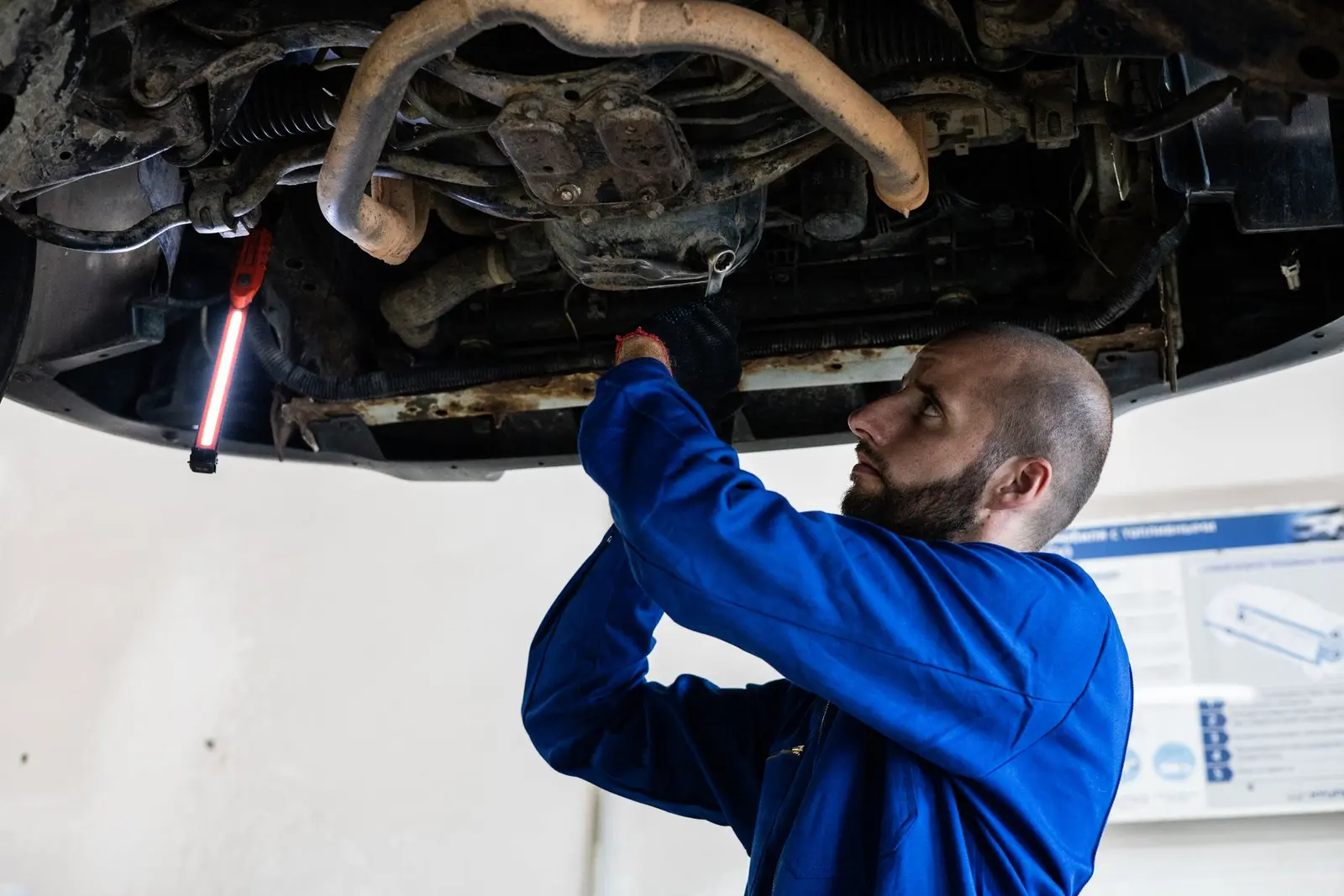
CVT Transmission Repair in California
Accurate diagnostics and precision repairs for Continuously Variable Transmissions.
CVT Transmission Repair: What You Should Know
California's roads are full of Nissan, Honda, Subaru and Toyota models with continuously variable transmissions, and long commutes in heavy traffic are hard on them. A CVT uses a steel belt between two variable pulleys, controlled by precise hydraulic clamping pressure. Whining, shudder, "rubber-band" acceleration or limp mode can come from fluid condition, a valve body or solenoid fault, or internal belt and pulley wear. Some of those can be repaired. Others mean replacement. Diagnosis tells you which before you spend money.
California
CVT Repair in California
What to expect when a CVT is diagnosed and repaired in California.
Written estimate and your authorization first
California repair dealers must give you a written estimate for parts and labor and get your authorization before work starts. If more work turns up, you are contacted and must approve it before it is done.
Source: BAR: Your auto repair rights(opens in a new tab)Warning lights and Smog Check
A lit check engine light means an OBD II vehicle will not pass Smog Check, and many transmission faults set that light. Fixing the real cause, rather than clearing codes, is what gets the vehicle through inspection.
Source: BAR Smog Check Reference Guide (Appendix D)(opens in a new tab)Transaxles are covered too
Where the transmission and differential share one housing and fluid supply (a transaxle), California's automatic transmission trade standards apply to both parts.
Source: BAR: Accepted trade standards(opens in a new tab)Built for how California drives
Long climbs like the Grapevine, Cajon Pass and I-80 over Donner, Central Valley and Inland Empire summer heat, and stop-and-go Los Angeles and Bay Area traffic all load drivetrains differently. We take how and where you drive into account when we diagnose and recommend repairs.
General information based on Bureau of Automotive Repair and California Air Resources Board publications, not legal advice. Rules change; check the linked sources for your vehicle.
Common Symptoms & Warning Signs
Recognize these warning signs early to avoid catastrophic drivetrain damage.
Loud Whining or Buzzing
High-pitched bearing whine from the primary or secondary pulley variators that intensifies with vehicle speed.
Judder or Shutter Under Acceleration
Vehicle violently shakes or stumbles when accelerating from a dead stop, indicating steel belt slippage on the pulley faces.
Engine Revs Without Acceleration
The tachometer surges up to 4,000 RPM, but the car barely crawls forward due to lost hydraulic clamping pressure.
CVT Overheating & Forced Limp Mode
The transmission warning light comes on in hot traffic or on a long climb and the vehicle drops into limp mode with reduced speed.
How the Problem Is Diagnosed
We believe in data-driven diagnostics. Rather than guessing with expensive replacement parts, our technicians follow rigorous diagnostic protocols.
High-Pressure Hydraulic Logging
Interfacing with the CVT TCM to monitor secondary pulley clamp pressure (reaching up to 800+ PSI).
Degradation Counter Inspection
Scanning the onboard CVT fluid degradation algorithm to measure thermal load history.
Pan Magnet & Debris Trap Analysis
Inspecting pan magnets for fine steel powder indicating push-belt element wear.
Repair & Replacement Options
High-Pressure Flow Control Valve Replacement
Installing upgraded hardened steel Sonnax flow control valves to restore proper clamping pressure.
CVT Stepper Motor & Valve Body Service
Replacing faulty ratio control stepper motors and solenoids.
Complete Remanufactured CVT Assembly
Replacing the unit with a remanufactured CVT that includes updated parts, when repair is not practical.
Common Vehicles & Powertrains Involved
Examples of vehicles where this work is commonly needed. Call with your year, make, model and engine to confirm we can help with your specific vehicle.
- • Ford Escape Hybrid CVT
- • Jeep Patriot/Compass CVT (Jatco)
- • Nissan (Altima, Rogue, Murano, Sentra, Pathfinder - Jatco CVT7/CVT8)
- • Honda (Civic, Accord, CR-V CVT)
- • Subaru (Outback, Forester, Crosstrek Lineartronic CVT)
- • Toyota (Corolla, Prius e-CVT)
- • Audi Multitronic CVT
- • Mini Cooper CVT
- • Light commercial delivery vans with CVT applications
How the Process Works
Targeted Scan
Interrogating TCM for specific CVT pressure and ratio fault codes.
Clamping Pressure Test
Verifying primary and secondary pulley hydraulic response.
Repair or Unit Replacement
Executing surgical valve body repair or installing turnkey remanufactured CVT.
Specialized Fluid Fill
Utilizing 100% manufacturer-specified high-traction CVT fluid.
Calibration & TCM Calibration Data Write
Writing the unique ROM calibration data file into the TCM to ensure smooth pulley ratio mapping.
Frequently Asked Questions About CVT Transmission Repair
Related Powertrain Services
Call to Discuss Your Repair
Engine and transmission problems are easiest to explain by phone. Tell us your vehicle and symptoms (slipping, noises, warning lights) and we'll explain the likely next steps and how an estimate works.
Phone estimates are non-binding. You receive a written quote after inspection, and no work starts without your approval.
Warranty: Warranty coverage is available. Terms depend on the repair, part or engine and are stated in writing on your estimate.
Towing: Towing is available. Ask about towing for your location when you call.