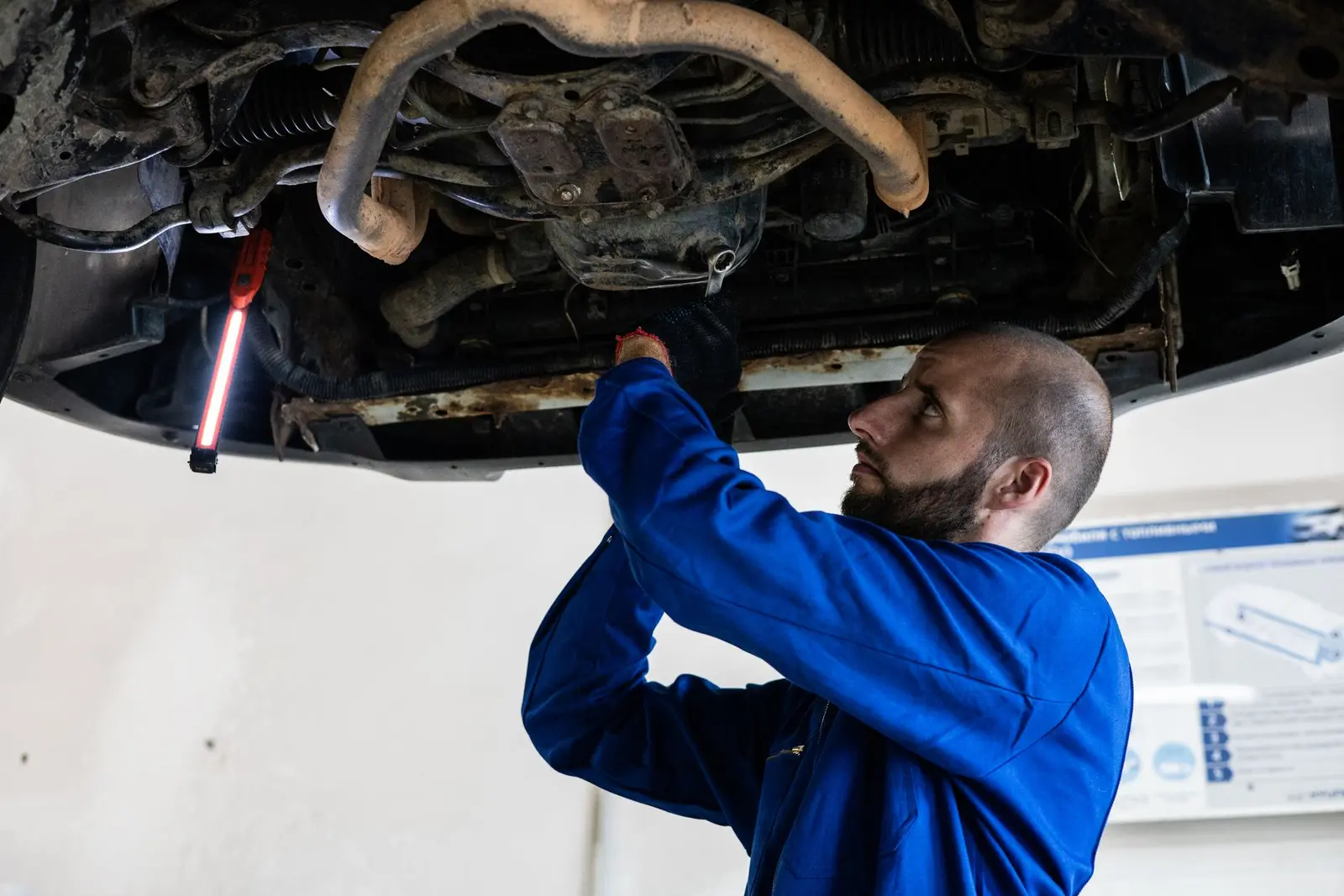
Transmission Repair in California
Accurate diagnostics and precision repairs to keep your transmission shifting smoothly.
Transmission Repair: What You Should Know
A transmission that slips, flares or refuses to shift is stressful anywhere, and California adds its own pressures: hours of stop-and-go freeway traffic, long mountain grades and inland summer heat. Most problems don't start out needing a rebuild. Careful diagnosis separates a failed sensor, a sticking solenoid, a worn valve body or a leaking seal from internal damage, and California rules mean you see a written estimate and approve it before any work begins. If you are still working out what your symptoms mean, start with the warning signs of transmission failure, what actually drives transmission repair estimates in California, and whether it is safe to keep driving with a fluid leak.
California
Transmission Repair in California: What to Expect
California has specific rules for how transmission work is estimated, authorized and documented. Here is what they mean for you.
Written estimate and your authorization first
California repair dealers must give you a written estimate for parts and labor and get your authorization before work starts. If more work turns up, you are contacted and must approve it before it is done.
Source: BAR: Your auto repair rights(opens in a new tab)Teardown only with your approval
Before an automatic transmission is removed, California trade standards require checking whether external parts or adjustments will fix the fault. If a full teardown is needed to diagnose it, a revised written order is prepared and you authorize the teardown first.
Source: BAR: Accepted trade standards(opens in a new tab)"Rebuilt" and "remanufactured" mean something specific here
Under California's accepted trade standards (CCR § 3361.1), a shop that advertises a transmission as rebuilt, remanufactured, reconditioned, exchanged or overhauled must perform every required procedure, including disassembling, cleaning and inspecting the valve body unless the manufacturer specifies otherwise.
Source: BAR: Accepted trade standards(opens in a new tab)Warning lights and Smog Check
A lit check engine light means an OBD II vehicle will not pass Smog Check, and many transmission faults set that light. Fixing the real cause, rather than clearing codes, is what gets the vehicle through inspection.
Source: BAR Smog Check Reference Guide (Appendix D)(opens in a new tab)
General information based on Bureau of Automotive Repair and California Air Resources Board publications, not legal advice. Rules change; check the linked sources for your vehicle.
Common Symptoms & Warning Signs
Recognize these warning signs early to avoid catastrophic drivetrain damage.
Slipping Gears & RPM Flare
The engine revs unexpectedly when accelerating, but the vehicle hesitates to increase speed or suddenly lurches into the next gear ratio.
Delayed or Harsh Shifting
A noticeable hesitation before engaging Drive or Reverse, accompanied by a violent clunk, shudder, or jarring gear transition.
Red or Brown Fluid Puddles
Transmission fluid leaking from the pan gasket, cooler lines, torque converter seal, or axle output seals beneath the vehicle.
Burning Smell & Overheating
A distinct sweet, burnt acrid smell caused by overheated automatic transmission fluid losing its hydraulic and lubricating properties.
Transmission Warning Light / Check Engine
Illuminated dashboard indicators triggered by transmission diagnostic trouble codes (DTCs) such as P0700, P0730, or P0750.
Whining, Humming, or Clunking
Audible mechanical noises that change pitch with vehicle speed, indicating worn planetary gearsets, bearings, or low fluid pressure.
How the Problem Is Diagnosed
We believe in data-driven diagnostics. Rather than guessing with expensive replacement parts, our technicians follow rigorous diagnostic protocols.
OBD-II & TCM Digital Diagnostic Scan
We interface factory-level diagnostic scanners with your Transmission Control Module (TCM) to extract manufacturer-specific trouble codes, live line pressures, and shift adaptation values.
Fluid Condition & Pan Magnet Inspection
Technicians inspect the transmission fluid color, odor, and drop the lower pan to analyze metallic debris on magnetic traps (distinguishing normal clutch wear from catastrophic gear damage).
Hydraulic Line Pressure Testing
Manual pressure gauges are tapped into test ports to verify that the hydraulic pump generates adequate operating pressures across all gear ranges.
Comprehensive Road & Load Testing
A road test checks upshift points, downshift timing, torque converter lockup and engine braking, including under load where the symptom appears.
Repair & Replacement Options
Solenoid & Valve Body Servicing
Cleaning, testing, and replacing individual shift, pressure control, or TCC lockup solenoids, or installing a calibrated remanufactured valve body.
Gasket, Cooler Line & Seal Replacement
Replacing dried front pump seals, rear output seals, pan gaskets, and rotted transmission cooler lines to restore hydraulic pressure integrity.
Torque Converter Replacement
Installing a balanced, heavy-duty torque converter to eliminate shuddering, slipping, and stator lockup issues.
Auxiliary Transmission Cooler Upgrades
An external transmission cooler protects transmissions that tow, climb long grades or spend hours in hot traffic.
Repair vs. Rebuild vs. Replacement Decision Guide
We never push an expensive replacement when a targeted repair will deliver dependable, lasting reliability. We inspect first, explain the data, and provide transparent estimates.
Minor In-Vehicle Repair
Best when the issue is confined to electrical sensors, solenoids, external leaks, or the valve body while internal gearsets and clutch packs remain mechanically sound.
Complete Transmission Rebuild
Ideal when internal friction clutches are worn, burnt, or hard parts are partially damaged. The transmission is fully disassembled and refreshed with brand-new wear parts.
Remanufactured Replacement
Recommended when the transmission case is cracked, catastrophic gear explosion has occurred, or a remanufactured unit with updated engineering fixes is the better long-term value.
Common Vehicles & Powertrains Involved
Examples of vehicles where this work is commonly needed. Call with your year, make, model and engine to confirm we can help with your specific vehicle.
- • Ford (F-150, Super Duty, Explorer, Mustang)
- • Chevrolet & GMC (Silverado, Tahoe, Suburban, Sierra)
- • Dodge & Ram (1500, 2500, 3500 Cummins, Charger)
- • Jeep (Grand Cherokee, Wrangler)
- • Toyota (Tundra, Tacoma, Camry, RAV4)
- • Honda (Accord, Civic, CR-V, Pilot)
- • Nissan (Altima, Rogue, Pathfinder, Titan)
- • Lexus, Acura, Subaru, Hyundai, Kia
- • BMW (3-Series, 5-Series, X5 with ZF 6HP/8HP)
- • Mercedes-Benz (722.6, 722.9, 9G-Tronic)
- • Audi & Volkswagen (DSG, Tiptronic)
- • Volvo, Land Rover, Porsche
- • Allison 1000/2000 Transmissions
- • Ford 4R100, 5R110, 6R140, 10R80/10R140
- • GM 4L60E, 4L80E, 6L80, 6L90, 10L80
- • Commercial delivery vans and fleet work trucks
How the Process Works
Intake & Symptoms Discussion
You describe the exact driving behaviors you've experienced, including when shifting issues occur.
Diagnostic Multi-Point Inspection
Our technicians run computer scans, pressure tests, and fluid evaluations to pinpoint the root cause.
Itemized Transparent Estimate
You receive a clear breakdown of parts, labor and repair options, including any warranty terms in writing.
Precision Repair & Calibration
We execute repairs using OEM or superior-grade components, followed by computer adapt learning resets.
Rigorous Quality Assurance
Every vehicle completes a multi-mile road test verifying smooth shifts before delivery.
Frequently Asked Questions About Transmission Repair
Related Powertrain Services
Complete internal tear-down and rebuild with upgraded components.
Turnkey installation of factory-remanufactured zero-mile transmissions.
Precision service for electronic 6, 8, and 10-speed transmissions.
Heavy-duty pressure plates, friction discs, and hydraulic slave cylinders.
Call to Discuss Your Repair
Engine and transmission problems are easiest to explain by phone. Tell us your vehicle and symptoms (slipping, noises, warning lights) and we'll explain the likely next steps and how an estimate works.
Phone estimates are non-binding. You receive a written quote after inspection, and no work starts without your approval.
Warranty: Warranty coverage is available. Terms depend on the repair, part or engine and are stated in writing on your estimate.
Towing: Towing is available. Ask about towing for your location when you call.