Transmission Rebuilding in California
A complete rebuild replaces worn internal parts and can correct known factory weak points.
Transmission Rebuilding: What You Should Know
A transmission rebuild means taking the unit fully apart, replacing the wear parts (friction clutches, steels, seals, gaskets, bushings and filters), cleaning and inspecting the valve body, and reassembling it to specification. In California, the word "rebuilt" carries legal weight: a shop that advertises rebuilt or overhauled automatic transmissions must perform every procedure the state's trade standards require. Rebuilding is often the right choice for trucks and older vehicles worth keeping, or when a replacement unit is hard to find. Compare it with replacement in our transmission rebuild vs. replacement guide.
California
Rebuilding Under California's Trade Standards
California defines what a proper automatic transmission rebuild has to include.
"Rebuilt" and "remanufactured" mean something specific here
Under California's accepted trade standards (CCR § 3361.1), a shop that advertises a transmission as rebuilt, remanufactured, reconditioned, exchanged or overhauled must perform every required procedure, including disassembling, cleaning and inspecting the valve body unless the manufacturer specifies otherwise.
Source: BAR: Accepted trade standards(opens in a new tab)Teardown only with your approval
Before an automatic transmission is removed, California trade standards require checking whether external parts or adjustments will fix the fault. If a full teardown is needed to diagnose it, a revised written order is prepared and you authorize the teardown first.
Source: BAR: Accepted trade standards(opens in a new tab)An invoice that names used and rebuilt parts
Your final invoice lists every part supplied and states which parts are used, reconditioned or rebuilt. You can also ask for your replaced parts back. Ask before you authorize the repair.
Source: BAR: Your auto repair rights(opens in a new tab)Transaxles are covered too
Where the transmission and differential share one housing and fluid supply (a transaxle), California's automatic transmission trade standards apply to both parts.
Source: BAR: Accepted trade standards(opens in a new tab)
General information based on Bureau of Automotive Repair and California Air Resources Board publications, not legal advice. Rules change; check the linked sources for your vehicle.
Common Symptoms & Warning Signs
Recognize these warning signs early to avoid catastrophic drivetrain damage.
Total Loss of Forward or Reverse
Vehicle will not move when shifted into gear due to shattered planetary gears, broken sun shell, or severed input shaft.
Violent Shudder & Metal in Pan
Metallic glitter or silver flakes in the transmission fluid, indicating metal-on-metal friction inside the case.
Burnt, Black Fluid with Acrid Odor
Clutch material completely incinerated from extreme heat or prolonged slipping.
Severe Limp Mode
Transmission computer locks the gearbox into 2nd or 3rd gear default to prevent catastrophic lockup.
How the Problem Is Diagnosed
We believe in data-driven diagnostics. Rather than guessing with expensive replacement parts, our technicians follow rigorous diagnostic protocols.
Bench Teardown & Case Inspection
Unit is removed, fully disassembled, and cleaned in an ultrasonic hot-tank bath.
Micrometer Blueprint Inspection
Tolerances on input shafts, planetary carriers, drums, and pump gears are measured with precision gauges.
Valve Body Hydro-Testing
Vacuum testing individual valve circuits to identify worn bores requiring Sonnax oversized reaming.
Repair & Replacement Options
Master Rebuild Kit Installation
All new OEM or upgraded friction clutches, steel plates, Kevlar bands, molded rubber pistons, gaskets, and viton O-rings.
Heavy-Duty Sonnax & TransGo Upgrades
Installation of shift improvement kits, hardened sun shells, and pressure regulator valve upgrades.
New Balanced Torque Converter
Every rebuilt transmission receives a completely remanufactured, precision-balanced torque converter.
Common Vehicles & Powertrains Involved
Examples of vehicles where this work is commonly needed. Call with your year, make, model and engine to confirm we can help with your specific vehicle.
- • GM 4L60E, 4L80E, 6L80, 8L90, 10L80
- • Ford 4R70W, 5R110W, 6R80, 10R80
- • Chrysler/Ram 48RE, 68RFE, 8HP70
- • Toyota/Lexus A750, A760, AB60 6-Speed & 8-Speed
- • Honda 5-Speed & 6-Speed Automatic transaxles
- • Nissan/Aisin 5 & 6-speed units
- • ZF 6HP19, 6HP26, 8HP45, 8HP70
- • Mercedes-Benz 722.6, 722.9 7G-Tronic
- • Allison 1000/2000 Series
- • Commercial fleet vehicles
- • Heavy towing diesel trucks
How the Process Works
Transmission Extraction
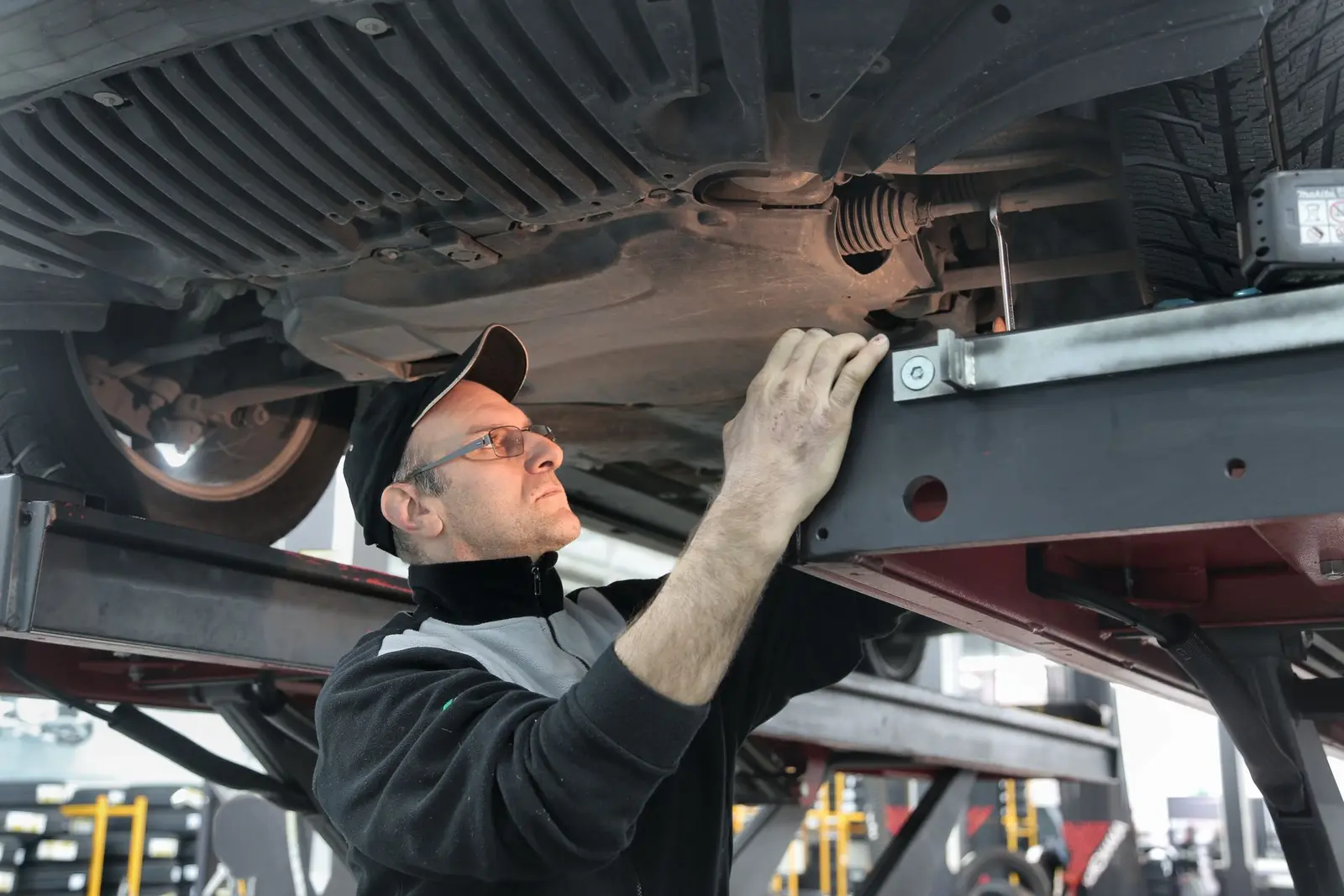
Carefully dropped from vehicle using hydraulic powertrain table lifts.
Complete Teardown
Every bolt, clutch disc, and gear inspected piece-by-piece.
Machining & Upgrades
Valve body reamed, pump surfaces machined flat, hardened components installed.
Blueprint Assembly
Assembled with calibrated end-play clearances and new friction clutches.
Installation & Road Validation
Flushed cooler lines, filled with synthetic fluid, road tested under varying loads.
Frequently Asked Questions About Transmission Rebuilding
Related Powertrain Services
Call to Discuss Your Repair
Engine and transmission problems are easiest to explain by phone. Tell us your vehicle and symptoms (slipping, noises, warning lights) and we'll explain the likely next steps and how an estimate works.
Phone estimates are non-binding. You receive a written quote after inspection, and no work starts without your approval.
Warranty: Warranty coverage is available. Terms depend on the repair, part or engine and are stated in writing on your estimate.
Towing: Towing is available. Ask about towing for your location when you call.