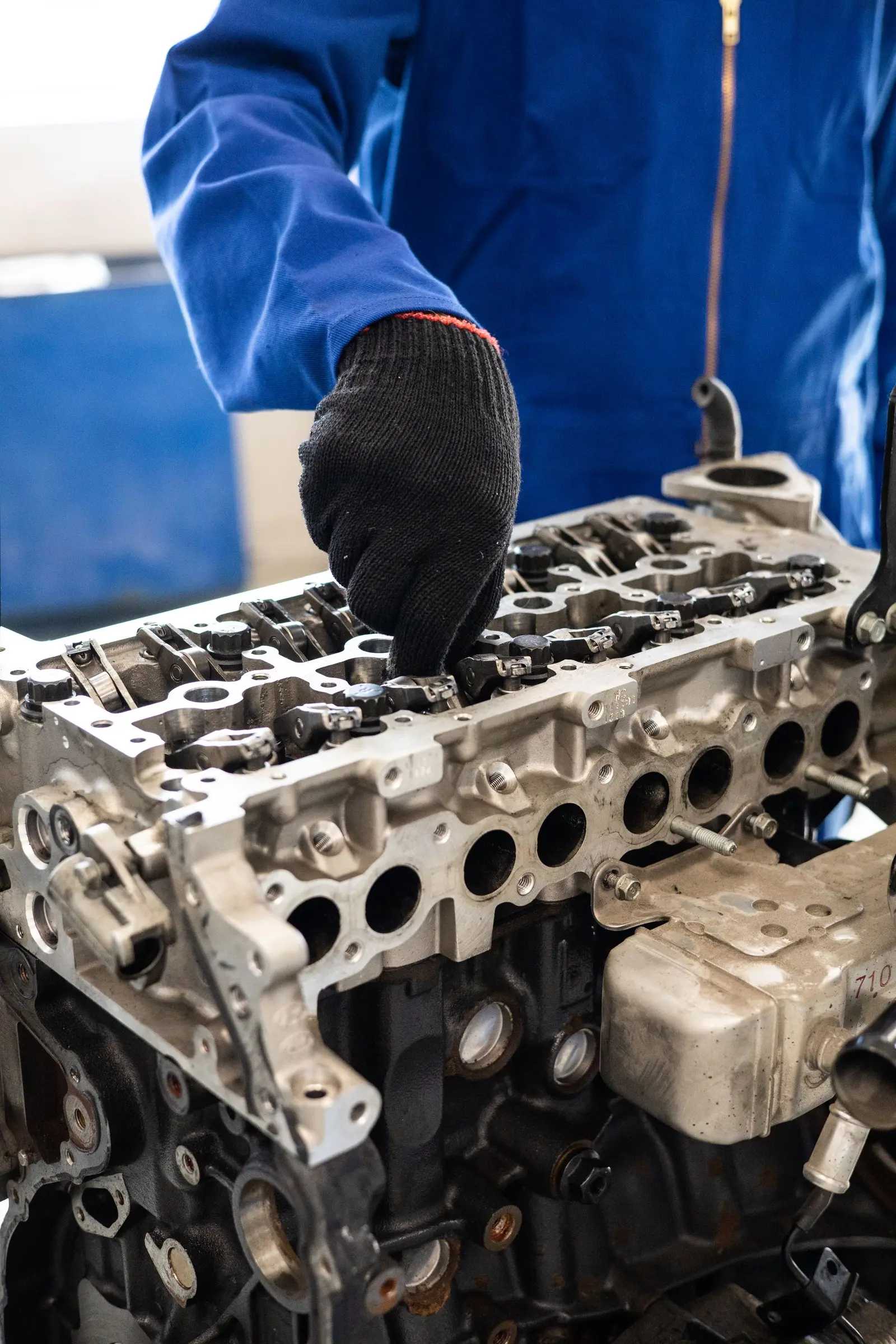
Engine Rebuilding in California
Restore classic, heavy-duty, and performance engines to better-than-factory blueprint specifications.
Engine Rebuilding: What You Should Know
Rebuilding your original engine is often the simplest route for a California vehicle, because the engine family and emission configuration stay exactly as certified. BAR and CARB recommend that route for avoiding engine change problems. A proper rebuild means measuring and machining the block and heads, replacing pistons, rings, bearings, seals and timing components, and reassembling to specification. Our engine rebuilding is done in-house. It makes most sense for engines worth keeping, or where a correct replacement is hard to source.
California
Why Rebuilding Suits California Vehicles
Keeping the original engine avoids most engine-change complications.
BAR and CARB's own recommendation
The state's engine change guidelines recommend rebuilding and reinstalling the original engine, transmission and emission control configuration, using a California-certified engine, or using a CARB-exempted engine package.
Source: BAR Smog Check Reference Guide (Appendix D)(opens in a new tab)Rebuilds must not weaken emission controls
California regulation (CCR § 3362.1) prohibits a repair dealer from making changes that degrade the original emission control system when rebuilding the original engine or installing a replacement.
Source: BAR: Accepted trade standards(opens in a new tab)An invoice that names used and rebuilt parts
Your final invoice lists every part supplied and states which parts are used, reconditioned or rebuilt. You can also ask for your replaced parts back. Ask before you authorize the repair.
Source: BAR: Your auto repair rights(opens in a new tab)
General information based on Bureau of Automotive Repair and California Air Resources Board publications, not legal advice. Rules change; check the linked sources for your vehicle.
Common Symptoms & Warning Signs
Recognize these warning signs early to avoid catastrophic drivetrain damage.
Excessive Oil Consumption & Blow-By
Engine burning a quart of oil every few hundred miles with crankcase pressure pushing oil out of dipstick tube.
Low Cylinder Compression Across Multiple Banks
Piston rings worn flat, losing cylinder seal and causing power loss.
Crankshaft Journal Scoring & Spun Bearings
Bearing shells spinning inside rod or main caps, damaging crank journals.
How the Problem Is Diagnosed
We believe in data-driven diagnostics. Rather than guessing with expensive replacement parts, our technicians follow rigorous diagnostic protocols.
Complete Disassembly & Ultrasonic Cleaning
Stripping block down to bare metal and hot-tank washing to remove carbon and scale.
Magnetic Particle / Magnaflux Crack Testing
Electromagnetically testing block and cylinder heads for microscopic thermal stress cracks.
Micrometer Blueprint Inspection
Measuring cylinder bore roundness, crankshaft runout, and deck surface flatness.
Repair & Replacement Options
Precision Cylinder Boring & Plateau Honing
Machining cylinder bores oversize and finishing with plateau hone for optimal ring seating.
Crankshaft Micro-Polishing & Line Honing
Restoring crankshaft journals to mirror finish and ensuring main bearing alignment.
Complete Cylinder Head Restoration
Multi-angle valve job, new valve guides, positive stem seals, and surface resurfacing.
Common Vehicles & Powertrains Involved
Examples of vehicles where this work is commonly needed. Call with your year, make, model and engine to confirm we can help with your specific vehicle.
- • Classic Chevy Small Block & Big Block V8s (350, 454, LS-series)
- • Ford Windsor, Cleveland, Modular 4.6L/5.4L & Coyote 5.0L
- • Mopar 340, 360, 440 & HEMI engines
- • Cummins 5.9L & 6.7L Diesel
- • Toyota 2JZ, 1UZ, 2TR-FE, 1GR-FE
- • Nissan RB, VR, VQ series
- • Subaru EJ257 Boxer engines
- • Classic and modern European performance engines
- • Medium-duty fleet diesel engines (International DT466, Cummins ISB, CAT)
How the Process Works
Complete Teardown
Disassembling block, labeling every piston and bearing.
Block Machining
Boring, decking, line-honing, and crank balancing.
Balanced Internal Assembly
Installing matched piston/rod sets, file-fitting rings, and gauging bearing clearances with plastigage.
Valvetrain Setup & Degreeing
Degreeing camshaft to verify exact valve lift timing.
Bench Prime & Break-In
Priming oil pressure, performing heat-cycling break-in with high-zinc break-in oil.
Frequently Asked Questions About Engine Rebuilding
Related Powertrain Services
Call to Discuss Your Repair
Engine and transmission problems are easiest to explain by phone. Tell us your vehicle and symptoms (slipping, noises, warning lights) and we'll explain the likely next steps and how an estimate works.
Phone estimates are non-binding. You receive a written quote after inspection, and no work starts without your approval.
Warranty: Warranty coverage is available. Terms depend on the repair, part or engine and are stated in writing on your estimate.
Towing: Towing is available. Ask about towing for your location when you call.